
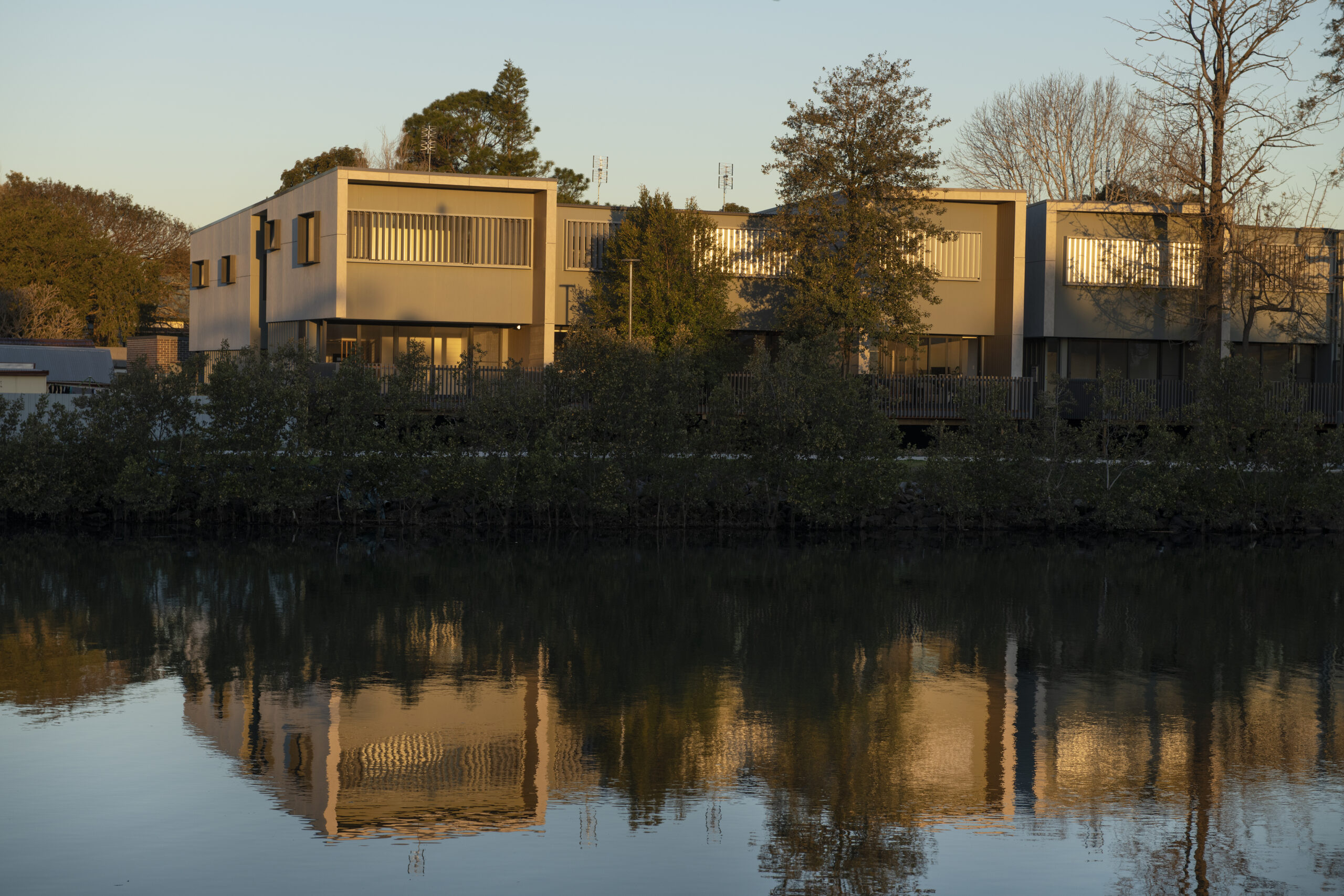
Velocity is a 31-townhouse residential development on the foreshore of Throsby Creek in Maryville. From the early stages, the site presented an opportunity to make greater use of its position alongside one of Newcastle’s established cycling corridors.
The project team explored the principles of Bicycle Oriented Development, an approach that considers how residential design can make cycling a practical part of everyday movement. Research prepared specifically for the site examined international examples of bicycle-focused communities and how residential development could respond more directly to existing transport infrastructure. Similar in principle to Transit Oriented Development, the focus was on making cycling easier, more convenient and better integrated into daily life.
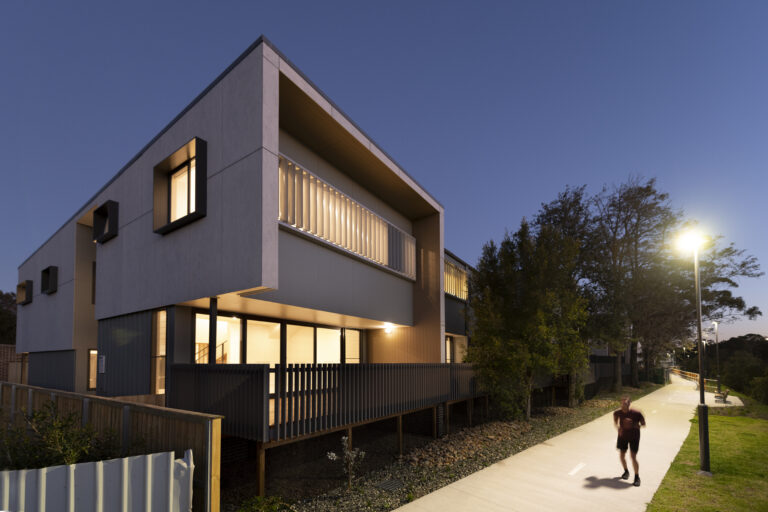
At Maryville, that translated into practical considerations including bicycle access, on-site cycle parking and stronger connections with the surrounding network. The Throsby Creek Cycleway already linked the area with a significant number of Newcastle suburbs, giving residents access to established infrastructure beyond the boundaries of the development.
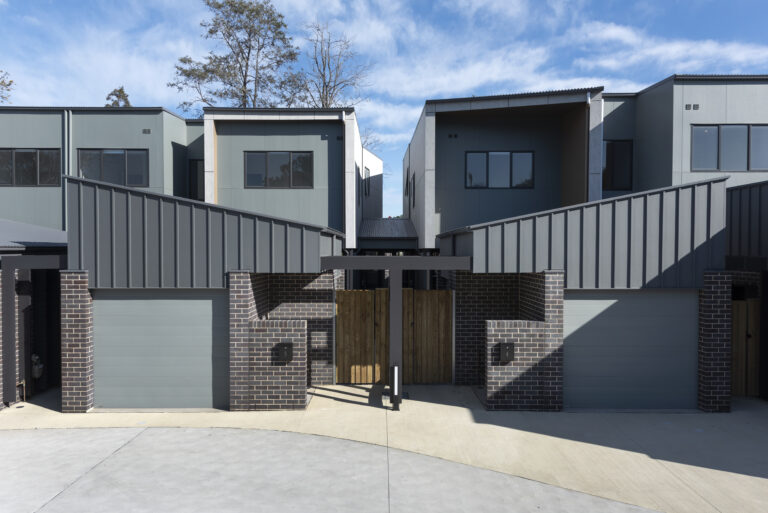
The project ultimately delivered 31 architect-designed, two-storey townhouses combining contemporary residential design with features that supported a more connected inner-city lifestyle. Its location also provided convenient access to Newcastle CBD, the harbour foreshore and surrounding neighbourhoods.
Completed in 2020, Velocity was recognised with the HIA-CSR Hunter Housing Award for Townhouse/Villa Over 5 Dwellings.
For us, Velocity remains a strong example of development shaped by context. Every site presents its own opportunities and constraints, and understanding them early can help shape a stronger outcome. In this case, recognising the value of the infrastructure and connections already surrounding the site became an important part of the project’s direction.